

Good Pharmacovigilance (GVP) Audit Services
Our GVP audit services support biotech and pharmaceutical companies in establishing, maintaining, and demonstrating compliant pharmacovigilance systems across the product lifecycle. We partner with Marketing Authorization Holders (MAHs), affiliates, and service providers to assess PV effectiveness, regulatory readiness, and ongoing compliance with global safety reporting expectations.
What is a GVP audit?
A GVP audit is a systematic, independent assessment of a pharmacovigilance system to determine whether safety processes, governance, and oversight comply with applicable regulatory requirements. This includes alignment with EU GVP Modules, MAH obligations, and global health authority expectations for safety reporting, signal management, and risk minimization.
GVP audits support inspection readiness by identifying gaps in PV systems before regulatory inspections and ensuring patient safety risks are appropriately monitored, assessed, and managed throughout a product’s lifecycle.
Why GVP audits matter
Inadequate GVP compliance can result in:
- Regulatory inspection findings, enforcement actions, or license impact
- Delayed, incomplete, or inaccurate safety reporting
- Weak signal detection and ineffective benefit–risk evaluation
- Insufficient oversight of outsourced pharmacovigilance activities

Our GVP audit offering
We provide a comprehensive, risk-based GVP audit service aligned with how regulators assess pharmacovigilance system compliance in practice.
Pharmacovigilance system audits
Assessment of the end-to-end PV system and quality framework supporting MAH responsibilities.
This includes:
- PV System Master File (PSMF) structure, maintenance, and governance
- Integration with the quality management system, including deviations and change control
- Oversight of pharmacovigilance activities across internal teams and external partners
Partners, distributors, and third parties
Evaluation of outsourced activities where PV responsibilities are delegated but accountability remains with the MAH.
This includes:
- Vendor qualification and ongoing oversight
- Safety Data Exchange Agreements (SDEAs)
- Distributors, specialty pharmacies, and service providers
Affiliates and local operating companies
Assessment of local pharmacovigilance implementation within global operating models.
This includes:
- Local Safety Officer (LSO) roles and escalation pathways
- Case processing and reporting timelines
- Alignment between local procedures and global PV requirements
Safety operations and reporting
Review of core pharmacovigilance activities supporting timely and accurate safety reporting.
This includes:
- Individual Case Safety Report (ICSR) processing
- Expedited and periodic reporting obligations
- Interfaces with Medical Information and call center activities
Signal management and risk management
Evaluation of processes supporting ongoing benefit–risk assessment.
This includes:
- Signal detection, validation, and prioritization
- Risk Management Plans (RMPs) and REMS
- Post-Authorization Safety Studies (PASS)
Patient-facing programs
Assessment of pharmacovigilance controls in programs with direct patient interaction, where safety risk is elevated.
This includes:
- Patient Support Programs (PSPs)
- Compassionate Use Programs (CUPs)
- Market Research Programs (MRPs)
QPPV and pharmacovigilance leadership
Independent review of oversight, governance, and authority within the pharmacovigilance system.
This includes:
- QPPV role, availability, and escalation authority
- Deputy and backup arrangements
- Interfaces with senior management and quality leadership

How our GVP audit process works
Our GVP audits follow a structured, risk-based methodology aligned with regulatory expectations and inspection practice.
Step 1 - Scoping and needs assessment
We define audit scope based on product lifecycle stage, geographic footprint, outsourcing model, and MAH pharmacovigilance responsibilities.
Step 2 - Auditor assignment
A GVP auditor is assigned based on relevant pharmacovigilance experience, therapeutic area knowledge, and regulatory inspection exposure.
Step 3 - Audit preparation
We develop an audit plan and agenda aligned to applicable GVP Modules and local requirements, supported by a focused documentation request list.
Step 4 - Audit execution
Audits are conducted onsite or remotely and focus on system effectiveness, compliance with reporting obligations, and oversight of internal and third-party activities.
Step 5 - Audit reporting
Inspection-ready reports provide a clear narrative of observations, supported by structured findings that reference relevant GVP requirements and pharmacovigilance risk.
Step 6 - Follow-up and ongoing support
We can support CAPA development, remediation planning, re-audits, and ongoing inspection readiness as required.
Trusted by top-tier teams worldwide









650+
Audits conducted in the last year
800
Network of expert GxP auditors
110
Countries covered
Why choose Apotech for GVP audit services?
We differentiate ourselves through pragmatic, regulator-focused audit delivery grounded in real-world pharmacovigilance practice.

Global GxP specialists
Our global network of senior auditors spans all GxP disciplines, enabling pharmacovigilance audits that combine global oversight with local regulatory and language expertise.

Regulatory and pharmacovigilance expertise
Our auditors bring hands-on experience across MAHs, affiliates, CROs, and service providers, supported by current knowledge of EU GVP Modules and global health authority expectations.

Competitive and cost-effective delivery
By leveraging regionally based auditors, we minimize travel and logistical costs while maintaining audit depth and regulatory credibility.

Flexible, client-centered service model
We provide scalable GVP audit solutions, from targeted vendor or affiliate audits to fully outsourced global pharmacovigilance audit programs, supported by dedicated Business and Project Managers.
Our Global Reach
We take pride in our extensive global audit network and are committed to utilising local auditors based in-country.
This approach offers several key benefits: local auditors possess in-depth knowledge of regional regulations, communicate effectively in the local language, and help reduce travel expenses for our clients. We have successfully provided support in all the regions highlighted on the map below.
Featured case studies
GVP Audits Worldwide
GVP Audits Worldwide Introduction US Biotechnology Our client is a global Biotechnology company dedicated to genetics and molecular biology. They are Headquartered in the US, with offices in most major economies. Apotech auditors Our Auditors have 20+ years’ experience in the industry and have all conducted over 100 GVP audits. Types of Audits Affiliate Distributor/…
FAQs on GVP Audits
We provide a modern approach to auditing that offers full transparency. We aim to make the process as simple to understand as possible and are always on hand to answer any questions you might have.
Here are some of the questions we get asked most often.
Compliance, standards & quality assurance
Our GVP audit services are delivered in line with applicable regulatory requirements and guidance, including:
- EU GVP Modules and MAH obligations
- EMA, MHRA, FDA, and global health authority expectations
- ICH guidelines and applicable national requirements
All audits are conducted independently, objectively, and with strict confidentiality, with a clear focus on inspection readiness.
Data protection & confidentiality
We operate under robust data protection and confidentiality controls to safeguard sensitive safety, patient, and proprietary information.
Contact us
Whether you need a full pharmacovigilance audit program or targeted support for a specific risk area, our team can help strengthen your PV system and inspection readiness.
Or if you’re also looking for consultancy services, find out more about our QA services and get in touch today.
Helpful resources
10 CAPA Metrics and KPIs Every Quality Team Should Track
By Imane Nohair, GxP Audit manager at Apotech Corrective and Preventive Actions (CAPAs) are a fundamental element of quality management across the pharmaceutical & biotechnology industries. When designed and executed effectively, CAPAs do more than address isolated non-conformities. CAPA processes strengthen quality systems, reduce regulatory risk, and support sustained compliance across global regulatory frameworks. Across…
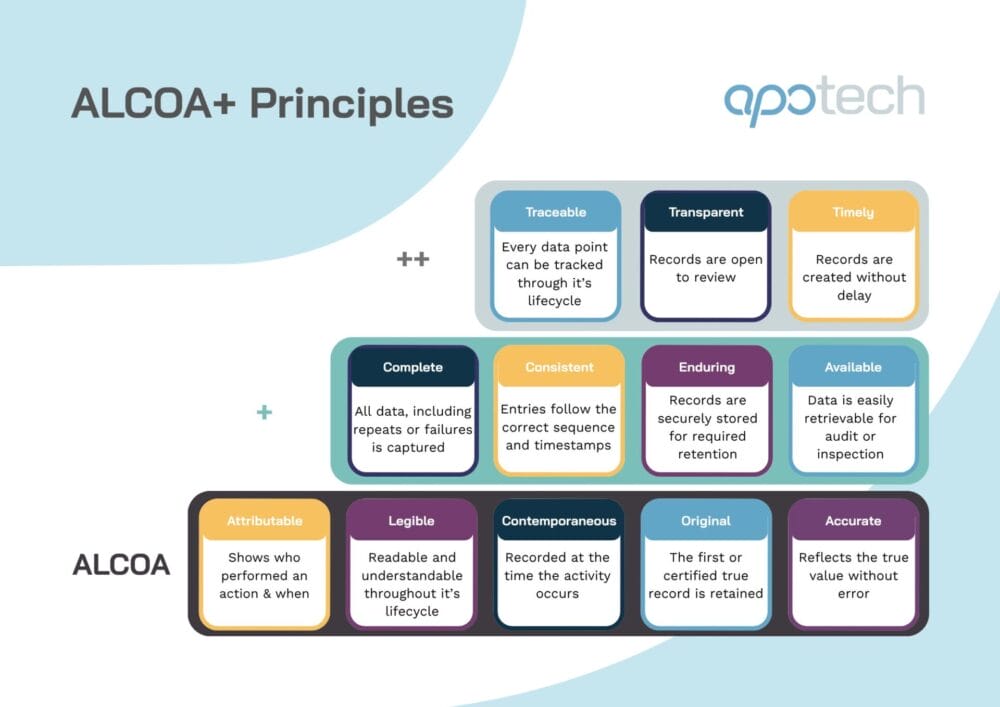
ALCOA+ Principles in Pharma: The Next-Gen Standard for Data Integrity
ALCOA+ and the modern data integrity landscape Data integrity underpins regulatory compliance and patient safety. And as pharmaceutical and biotech organizations adopt increasingly digital systems, automated workflows, and globalized supply chains, regulators including the FDA, EMA, and MHRA have intensified their focus on how data is generated, captured, and maintained. The ALCOA+ principles form the…

GxP Compliance Explained: Beyond Best Practice
Understanding the meaning of GxP is essential for any organization operating in the life sciences sector. In simple terms, GxP refers to “Good Practice” quality and regulatory guidelines, used to ensure products are safe, effective, and reliable throughout their lifecycle. These standards apply across pharmaceuticals, biotechnology, medical devices, and laboratory environments, and are enforced by…